Key takeaways
- Learn how to choose a dog doorbell for potty training, compare hanging bells and wireless buttons, and pick a clear signal your dog can ring every time.
A dog doorbell gives your dog a clear, polite way to say it is time to go outside. Instead of barking or scratching at the door, your dog rings a bell or presses a button, and you hear the signal from another room. That simple exchange can cut down on accidents.
Not every doorbell suits every dog or home. Hanging jingle bells work well on a standard door handle, while wireless buttons suit larger homes and dogs that chew straps. This guide explains how to choose a dog doorbell for potty training and compares five real options.
As an Amazon Associate, we earn from qualifying purchases.
Quick Answer
Choose hanging jingle bells for the simplest, cheapest start if your dog can reach a door handle. Choose a wireless button to hear the signal from another room, add a button outside, or stop a dog that chews straps. Pick one type, keep it in the same spot, and pair every ring with a trip outside.
Caldwell’s Pet Supply Co. Potty Bells

Caldwell’s Potty Bells are the classic hanging option, familiar on door handles since they first appeared in 2015. The design is deliberately simple: a nylon strap with two sets of bells that hangs from a doorknob, so your dog can nudge or paw the bells whenever it needs to go out.
The adjustable strap matters more than it first sounds. A strap that hangs too high is useless for a small puppy, while one that drags on the floor can tangle or tempt a playful dog. A three-step training guide is included. This budget-friendly pick moves easily between doors, though in a large home the jingle may be easy to miss, and it is the wrong choice for a determined chewer.
Specs
| Spec | Detail |
|---|---|
| Type | Hanging jingle bells on a nylon strap |
| Bells | Six bells in two sets |
| Strap | Adjustable length with snap closures |
| Item weight | 5 ounces |
| Power source | None required |
Mighty Paw Smart Bell 2.0

The Mighty Paw Smart Bell 2.0 replaces the jingle with a wireless button your dog presses with a paw or nose. This two-activator kit includes a plug-in receiver and two buttons, so one can sit inside by the exit door and the other outside, letting your dog ask to come back in as well as to go out. No hanging bell offers that two-way setup, which suits dogs that spend time in a fenced yard.
The buttons need only a light press, so small dogs, puppies, and older dogs with stiff joints can use them. The activators are water resistant and can be used indoors or outdoors, and the receiver plugs into a standard wall outlet, so there is no need to remember to charge anything. The receiver sounds at 60 decibels, loud enough to hear from another room in most homes. The main limitation is that the receiver needs mains power, so it will not sound during a power cut.
Specs
| Spec | Detail |
|---|---|
| Type | Wireless push-button doorbell |
| Kit contents | Two activators and one plug-in receiver |
| Activation pressure | 0.75 pounds |
| Receiver sound level | 60 decibels |
| Use | Indoor and outdoor, water resistant |
Hunger for Words Talking Pet Doorbell
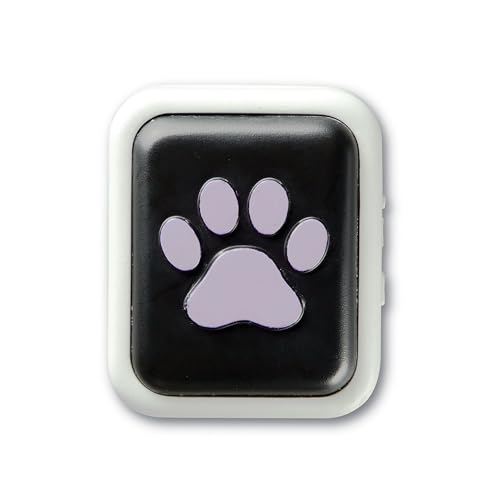
The Hunger for Words Talking Pet Doorbell takes a different approach: instead of a generic chime, it lets your dog trigger a spoken word. The button comes with a pre-recorded bell sound, or you can record your own word, such as outside, Created by speech therapist Christina Hunger, it comes with step-by-step guidance for owners new to pet communication.
It mounts on the wall with the included strip, or sits on the floor where your dog can reach it. Its large, flat shape suits a nose or paw press, and as a single self-contained button it needs no receiver and has no wireless range to worry about. It runs on AAA batteries, which are sold separately. It suits owners interested in pet communication beyond potty training, though it has no remote receiver, so you need to be close enough to hear it, and it is not waterproof.
Specs
| Spec | Detail |
|---|---|
| Type | Recordable talking doorbell button |
| Sound options | Pre-recorded bell sound or record your own word |
| Dimensions | 4.02 x 7.52 x 1.61 inches |
| Item weight | 2.82 ounces |
| Material | Plastic |
| Batteries | AAA batteries, sold separately |
Bluetree Dog Doorbells

Bluetree Dog Doorbells are another hanging-bell option, and they stand out for the size and number of their bells. The strap carries seven extra-large bells measuring 1.4 inches each, which produce a loud, clear jingle that carries well through a home.
The strap adjusts through three levels using snap buttons, so you can set the height for a small puppy or a tall dog. It fits most standard door handles and installs in seconds, and the metal bells and synthetic fabric keep it light enough for a small dog to ring with a gentle nudge. The main drawback is shared with all hanging bells: a dog that likes to chew may damage the strap.
Specs
| Spec | Detail |
|---|---|
| Type | Hanging jingle bells on an adjustable strap |
| Bells | Seven extra-large bells, 1.4 inches each |
| Strap | Three-level adjustable length with snap buttons |
| Material | Metal bells and synthetic fabric |
| Item weight | Not stated |
| Power source | None required |
EverNary Wireless Dog Door Bell

The EverNary Wireless Dog Door Bell is the most fully featured electronic option in this guide. Its touch-activated transmitters respond to a light touch or swipe, so even a small dog can trigger them, and the plug-in receiver offers 52 chimes with volume adjustable from silent up to 110 decibels. You can set a soft tone for a quiet house or a loud alert for a large, multi-level home.
The kit includes one receiver and two waterproof transmitters rated IP55, for inside and outside use. The wireless range reaches more than 800 feet in open areas, so the signal stays reliable through walls and across floors. This premium pick offers two buttons, many sounds, adjustable volume, and outdoor use in one kit. The trade-off is complexity, so choose the chime and volume before training starts so your dog hears the same sound every time.
Specs
| Spec | Detail |
|---|---|
| Type | Wireless touch-activated doorbell |
| Kit contents | One receiver and two transmitters |
| Chimes | 52 chimes |
| Volume range | 0 to 110 decibels |
| Wireless range | More than 800 feet in open areas |
| Waterproof rating | IP55, transmitters |
How to Choose a Dog Doorbell for Potty Training
Start with your home. In a small flat or single-level house where you are usually within earshot of the exit, hanging bells are enough. In a larger or multi-level home, a wireless button with a plug-in receiver carries the signal to rooms where a jingle would fade, and a second button outside lets your dog ask to come back in.
Next, consider your dog. Puppies and small dogs do best with a low-hanging strap or a button that needs only a light press, while strong chewers should avoid dangling straps and use a wall-mounted or floor-placed button instead. Older dogs with stiff joints also benefit from a touch-activated button, and adjustable volume lets nervous dogs start quietly.
Finally, weigh simplicity against features. Hanging bells need no power, no setup, and no troubleshooting, making them the best starting point for most first-time owners. Wireless and talking buttons add volume control, extra buttons, and clearer signals, but also add batteries, plugs, and settings. Training matters most: keep the doorbell in the same spot, guide your dog to ring it before every trip outside, and respond promptly to every ring in the early weeks.
Who Should Skip a Dog Doorbell
A doorbell is not right for every household. If your dog is an enthusiastic chewer that destroys fabric and straps, a hanging bell will become a chew toy, and a swallowed bell is a genuine safety risk. Choose a sturdy wall-mounted button instead.
A doorbell also only works when someone is home to hear it and open the door, so it cannot replace a proper schedule, a dog walker, or a safe outdoor area for a dog left alone all day. If nobody can hear a bell from the rooms where they spend most of their time, a wireless receiver near the living area is the only option that makes sense. Dogs that startle at sudden noises may avoid the exit if the chime is loud, so start with a quiet hanging bell and keep sessions short.
Frequently Asked Questions
How long does it take to train a dog to use a doorbell?
Most dogs start to connect the ring with going outside within a few days of consistent practice, and many are reliable within two to four weeks. Progress depends on pairing every ring with an immediate trip outside and responding promptly. Puppies may take longer because their bladder control is still developing.
Should I use hanging bells or a wireless button?
Hanging bells suit small homes, first-time owners, and dogs comfortable with a dangling strap, because they are simple, cheap, and need no power. Wireless buttons suit larger homes and dogs that chew straps, because the receiver carries the sound further and the button can sit on a wall or floor.
What if my dog rings the bell just to play outside?
False alarms are normal early on, so respond to every ring at first so your dog trusts the signal. Once the habit is established, make non-potty trips boring: go out on a lead, wait a short time, and come straight back inside without play.
Can cats use a dog doorbell too?
Yes, many cats learn to ring a hanging bell or press a touch button, especially the light-touch wireless models. Hang the bells low enough for a cat to reach, or put the button on the floor near the door. Cats are often less motivated by routine than dogs, so training may take longer.
Final Verdict
The best dog doorbell for potty training is the one your dog can ring easily and you can always hear. For most households, a hanging bell such as the Caldwell’s Potty Bells or the Bluetree Dog Doorbells is the smartest starting point. If your home is large, your dog chews straps, or you want a button outside as well as inside, step up to a wireless system such as the Mighty Paw Smart Bell 2.0 or the EverNary Wireless Dog Door Bell. If you like the idea of your dog speaking a word rather than ringing a chime, the Hunger for Words Talking Pet Doorbell is a distinctive option that grows with your dog’s communication skills. Whichever you choose, keep the routine consistent and place the doorbell in the same spot every day.