Our Short List of 3

All 4 Picks at a Glance
| Product | Specs | Action |
|---|---|---|
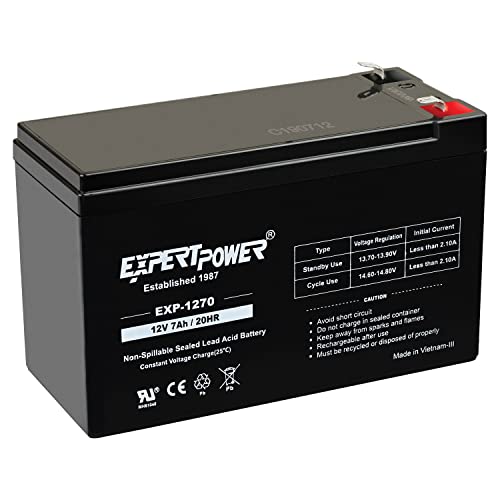
| 1. ExpertPower EXP1270 12V 7Ah — the standard alarm and UPS size | Check price on Amazon | |
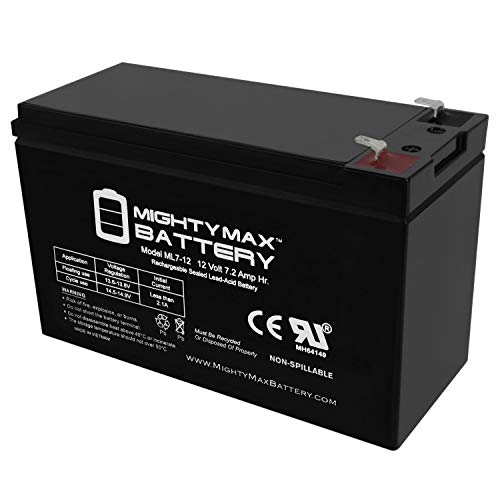
| 2. Mighty Max Battery ML7-12 12V 7.2Ah — same footprint, F1 terminals | Check price on Amazon | |
| 3. ExpertPower EXP1250 12V 5Ah — the compact case for tight compartments | Check price on Amazon | |
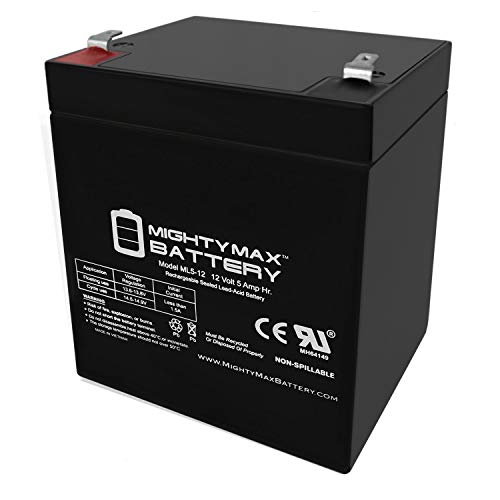 4. Mighty Max Battery ML5-12 12V 5Ah — the other compact option | Check price on Amazon |
Key takeaways
- Compare the best small lead acid batteries in compact 12V SLA sizes, from 5Ah blocks for tight alarm cabinets to 7Ah standby batteries for UPS and ride-on toys.
As an Amazon Associate we earn from qualifying purchases.
Affiliate Disclosure: This article contains affiliate links. If you buy through a link on this page, we may earn a commission at no extra cost to you. Product details below come from manufacturer and retailer listings, not from detailed research by our team.
What “small” actually means for a lead acid battery
Small lead acid batteries are the sealed blocks that quietly keep alarm panels, small UPS units, garage door openers, emergency lights and kids’ ride-on toys alive. Almost all of them use the same basic construction: a sealed lead acid (SLA) design, usually with absorbent glass mat (AGM) separators, valve regulation, and no caps to top up. You do not add water, you do not check electrolyte levels, and you can mount most of them on their side because the electrolyte is held in the mat rather than sloshing around as free liquid.
In this size class, “small” almost always means a 12-volt block somewhere between about 1.3 amp-hours and 9 amp-hours. The two footprints that dominate the market are the compact 5Ah case, roughly 3.5 inches long, and the standard 7Ah to 7.2Ah case, roughly 6 inches long. Both appear in the picks below, because which one is “best” depends entirely on the box your old battery came out of. A battery that is half an inch too tall for an alarm cabinet is not a bargain at any capacity.
Every pick in this guide is a 12V sealed lead acid battery of the same general type as the one it would replace. We deliberately left out lithium packs, motorcycle starting batteries with acid packs you fill yourself, and large deep-cycle batteries, because none of those are drop-in substitutes for a small SLA block even when the voltage matches.
The four small SLA batteries worth shortlisting
1. ExpertPower EXP1270 12V 7Ah — the standard alarm and UPS size
The EXP1270 is the battery most people picture when they think of a small lead acid battery: a 12-volt, 7 amp-hour sealed block measuring about 5.9 by 2.5 by 3.7 inches and weighing about 4.3 pounds, according to the Amazon listing. ExpertPower positions it for home security systems, UPS backup, exit signs, deer feeders and ride-on toys, which is a fair summary of where this footprint actually gets used.
The 7Ah rating is quoted at the 20-hour rate, which is the industry convention for standby SLA batteries and the number you should compare against your old battery’s label. If your existing battery is marked 12V 7Ah, 7.2Ah or even 8Ah in this same case size, the EXP1270 is the natural like-for-like swap. The listing describes a sealed, maintenance-free AGM construction that can be mounted in any position and is built to tolerate shock and vibration better than an open flooded cell.
Where it fits best: alarm panels with room for the 6-inch case, small desktop UPS units that ship with a 7Ah block, and ride-on toys that originally came with a 7Ah battery. Where it does not fit: compact garage opener backup compartments and slim emergency light housings designed around the shorter 5Ah case. Measure before you order, including the height with terminals fitted, because terminal posts add a fraction of an inch that spec sheets sometimes list separately.
2. Mighty Max Battery ML7-12 12V 7.2Ah — same footprint, F1 terminals
The ML7-12 is Mighty Max Battery’s entry in the same standard case: 12 volts, 7.2 amp-hours, with dimensions of 5.94 by 2.56 by 3.94 inches and F1 spade terminals, per the product listing. That makes it a direct alternative to the EXP1270 rather than a different class of battery, and for many buyers the choice between the two comes down to terminal style and which listing is in stock on the day.
The small capacity difference between 7Ah and 7.2Ah is mostly a rounding and rating convention difference, not a meaningful runtime gap. In standby service, both batteries will run an alarm panel for a similar number of hours during an outage, and both will age on roughly the same calendar schedule. What matters more is that the ML7-12 is a sealed AGM battery that the maker describes as maintenance-free and mountable in any position, with a one-year warranty stated in its documentation.
One detail worth checking: this listing is for the battery only. No wire harness, no mounting accessories, no charger. If your UPS or alarm panel reuses its existing leads — most do — that is fine. If your old battery’s terminals are corroded or the leads are damaged, budget for replacement leads separately rather than assuming they are in the box.
3. ExpertPower EXP1250 12V 5Ah — the compact case for tight compartments
When the battery compartment is too short for the 6-inch case, the 5Ah footprint is the usual answer. The EXP1250 is a 12-volt, 5 amp-hour sealed lead acid battery with F1 terminals, weighing about 3.2 pounds, with a case measuring about 3.54 by 2.76 by 3.98 inches, or 4.21 inches tall including the terminals, according to the listing data. ExpertPower lists it for security systems, UPS backup, garage door opener battery replacement and fire alarm panels.
That garage opener use case is the one that catches people out. Many opener backup batteries are exactly this 5Ah size, and owners often order the bigger 7Ah block because the capacity sounds better, then discover it physically cannot fit under the opener’s cover. The EXP1250’s shorter case is the correct trade: slightly less stored energy, in exchange for actually fitting the device it is meant to keep alive during an outage.
The listing states a one-year limited warranty, with the usual exclusions for misuse and improper installation. As with every battery here, the 5Ah figure is a 20-hour rate, so a load that drains it in one hour will get noticeably less than 5 amp-hours of usable capacity. For standby loads that sip power, that distinction barely matters; for a ride-on toy pulling hard current, it is why the same battery feels smaller than its label suggests.
4. Mighty Max Battery ML5-12 12V 5Ah — the other compact option
The ML5-12 covers the same compact ground as the EXP1250: 12 volts, 5 amp-hours, F1 terminals, and dimensions of 3.54 by 2.76 by 4.21 inches in a sealed AGM case. Mighty Max lists compatibility with a long roll of equipment, including Chamberlain and LiftMaster garage opener backup systems, portable speakers such as the ION Audio Block Rocker line, alarm panels and small scooters.
Having two near-identical 5Ah options on the shortlist is deliberate. Small SLA batteries are commodity items sold under many labels, and availability shifts constantly. If one listing is out of stock or has been replaced by a different variant, the other gives you a same-size, same-terminal alternative without re-measuring your compartment. Just confirm the terminal type on the listing you actually order, because this case size is also sold with the wider F2 terminal, and an F2 battery will not accept leads crimped for the narrower F1 tab without an adapter.
Like the ML7-12, the ML5-12 listing is for the battery alone, with no harness or mounting hardware included.
Side-by-side: the numbers that decide the fit
| Battery | Voltage | Capacity (20-hour rate) | Case size (approx.) | Terminal |
|---|---|---|---|---|
| ExpertPower EXP1270 | 12V | 7Ah | 5.9 x 2.5 x 3.7 in | F1 |
| Mighty Max ML7-12 | 12V | 7.2Ah | 5.94 x 2.56 x 3.94 in | F1 |
| ExpertPower EXP1250 | 12V | 5Ah | 3.54 x 2.76 x 3.98 in | F1 |
| Mighty Max ML5-12 | 12V | 5Ah | 3.54 x 2.76 x 4.21 in | F1 |
Dimensions and capacities are as published in the respective product listings. Always compare them against the label and the physical space of the battery you are replacing, including terminal height.
How to choose the right small lead acid battery
Match the footprint first, capacity second. Sealed lead acid batteries are sold in standardized case sizes, and your device was built around one of them. Pull the old battery, read its label, and measure the compartment. A 7Ah battery that does not fit is worth less than a 5Ah battery that does.
Check the terminal type. The two common spade terminals are F1 (about 0.187 inches wide) and F2 (about 0.25 inches wide). They look similar in photos and are not interchangeable without adapters. Every pick above uses F1 terminals, which matches most alarm, UPS and opener applications, but verify against your old battery before ordering.
Match voltage exactly, capacity approximately. The replacement must be the same voltage — 12V for everything in this guide. Capacity can move a little within the same case size; swapping a 4.5Ah battery for a 5Ah in the same footprint is routine, and a 7Ah for a 7.2Ah is a non-event. What you should not do is force a physically larger battery into a sealed compartment where it will sit against hot electronics or prevent the cover from closing.
Think about standby versus cycle duty. Alarm and UPS batteries spend their lives on float charge, waiting. Ride-on toys and scooters cycle their batteries hard. The same SLA block can do both, but a battery cycled deeply every day will wear out far faster than one on standby, and no small lead acid battery tolerates being left discharged. If a toy will sit all winter, charge the battery fully first and top it up every few months.
Mind the charging voltages. Listings and datasheets for this class of battery typically specify float charging around 13.5 to 13.8 volts and cycle charging around 14.4 to 14.8 volts for a 12V block. Your device’s built-in charger handles this automatically. If you charge a loose battery on a bench charger, use a charger with a sealed lead acid or AGM mode; an old unregulated charger meant for car batteries can overcharge a small SLA block and dry it out.
When to replace, and how to get rid of the old one
A small SLA battery in standby service typically lasts three to five years. Replace it when your alarm panel reports a low-battery trouble condition that does not clear after a day on charge, when a UPS fails its self-test or switches off within minutes during an outage, or when the case shows swelling, cracking or corroded terminals. A battery that is warm to the touch while sitting idle on its charger should be removed from service promptly.
Do not throw the old battery in household trash. Lead acid batteries are one of the most successfully recycled products in existence, and auto parts stores, home improvement stores and battery retailers routinely accept small SLA blocks for recycling, often taking the old one when you buy the replacement. Tape the terminals before transport so they cannot short against metal objects in the car.
Evidence note
We did not test these batteries ourselves. Specifications above are taken from the manufacturers’ and retailers’ published listings as indexed in November 2026. We attempted to re-open each Amazon US product page directly to confirm current availability, but Amazon blocked the automated read, so each ASIN above is presented as a candidate listing rather than a verified in-stock confirmation. Check the live listing for current availability and confirm the model number, dimensions and terminal type on the page before you buy, because sellers sometimes revise listings under the same ASIN.
Frequently asked questions
Can I replace a 12V 7Ah battery with a 12V 5Ah battery?
Only if the device accepts the smaller case and you accept shorter backup time. The voltage is the same, so it will work electrically in most standby equipment, but it will run the load for roughly two-thirds as long, and it may sit loosely in a compartment sized for the bigger block. The safer direction is matching the original capacity within the same case size.
What is the difference between F1 and F2 terminals?
Width. An F1 spade is about 0.187 inches wide and an F2 about 0.25 inches. Leads crimped for one will not grip the other properly. Check your old battery’s label, which usually states the terminal type, or measure the tab with a ruler.
How long will a small UPS battery keep my router running?
It depends on the UPS and the load, and the honest answer is usually measured in tens of minutes, not hours. Standby SLA batteries are rated at a 20-hour discharge rate; a load that empties the battery in under an hour extracts substantially less than the rated amp-hours. For long outages, a bigger battery bank, not a different small block, is the answer.
Can I use a car battery charger on a small SLA battery?
Use a charger with an SLA or AGM setting and a low charge rate appropriate for a 5 to 7 amp-hour battery. High-output chargers and unregulated trickle chargers can overcharge a small sealed battery, causing it to vent and dry out. When in doubt, charge it inside the device it belongs to.
Why did my new battery arrive slightly discharged?
Lead acid batteries self-discharge slowly in storage. A fresh battery that has sat on a shelf may need a full charge before it delivers its rated capacity. Charge it completely before installation, and if a listing or datasheet gives a manufacture date code, prefer the freshest stock available.