Key takeaways
- Find the best portable dust collectors for garage workshops, with rolling bases, strong airflow, fine filtration, and easy emptying for small garage spaces.
A garage workshop fills with sawdust fast. A table saw, a planer, or a router table can coat every surface in minutes, and fine dust hangs in the air long after the tool stops. The best portable dust collectors for garage workshops solve that problem at the source, pulling chips and dust straight from the tool before they spread across the floor, the car, and everything stored in the garage.
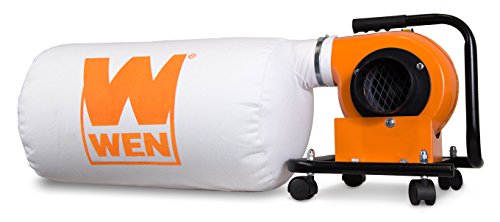

Quick answer: For most single-car and two-car garage workshops, the WEN DC3401 is the best starting point because it is light, compact, and moves 660 CFM through a standard 4-inch port. If you want finer filtration and a quieter induction motor, step up to the WEN DC3474 or the POWERTEC DC5372, both of which use 1-micron filtration. For the finest filtration in this group, the JET DC-650CK pairs a 2-micron canister filter with 650 CFM of airflow. Match the collector to your largest tool, check that your garage circuit can handle the motor, and leave room to roll the unit between machines.
Quick Picks
Our Short List of 3
All 4 Picks at a Glance
| Product | Specs | Action |
|---|---|---|
| 1. WEN DC3401 — Best Overall for Small Garages | Check price on Amazon | |
| 2. WEN DC3474 — Best Induction-Motor Upgrade | Check price on Amazon | |
 3. POWERTEC DC5372 — Best Fine Filtration on a Budget | Check price on Amazon | |
 4. JET DC-650CK — Best Canister Filtration | Check price on Amazon |
How to Choose
Airflow and CFM
Airflow, measured in cubic feet per minute, decides whether a collector can keep up with a tool. A table saw or a miter saw produces a steady stream of chips, while a thickness planer produces a heavy burst of shavings that can overwhelm a weak collector in seconds. For a garage workshop running one tool at a time, look for a rated airflow of at least 500 CFM. All four collectors in this guide meet that mark, with rated airflow from 560 to 660 CFM. If you plan to run a planer or a jointer often, favor the higher-airflow end of the range and keep the hose as short as the layout allows.
Filtration Rating
The filter bag or canister decides how much fine dust returns to the air you breathe. A 5-micron bag catches visible chips and coarse dust, which covers the bulk of what a saw or planer produces, but it lets a noticeable share of fine dust pass through. A 1-micron or 2-micron filter captures far more of that fine dust and leaves the garage air cleaner after a session. If anyone in the household has dust sensitivity, or if the garage shares air with the house, finer filtration is worth paying for. Canister filters generally filter finer than fabric bags and hold their airflow longer between cleanings, because their pleated surface gives dust more area to spread across.
Portability and Footprint
Portability is the whole point of this category. A garage workshop is usually shared with a car, storage shelves, bicycles, and a workbench, so a collector that cannot move becomes an obstacle. Look for a rolling base with swivel casters, at least two of them lockable, so the unit stays put while it runs and moves easily when it does not. Weight matters too. The lightest collector in this guide weighs about 17 pounds and can be carried with one hand, while the heaviest weighs more than 40 pounds and is best rolled rather than lifted. Measure the parking spot where the collector will live when it is not in use, and check the height as well as the floor area, since a tall unit with a full bag needs clearance under shelves.
Motor Type and Power
Most portable dust collectors in this class run on a standard household circuit, but the motor type still matters. Brushed motors are lighter and less expensive, and they power the most compact collectors in this guide. Induction motors are heavier and cost more, but they run quieter, last longer under steady use, and need less maintenance because they have no brushes to wear out and replace. Check the amperage as well. A collector that draws 12 amps or more needs a circuit with enough headroom, especially if a saw or a heater shares the same garage circuit. A dedicated circuit for the collector avoids tripped breakers in the middle of a cut.
Bag Capacity and Emptying
Bag capacity decides how often you stop work to empty the collector. A 12-gallon bag is enough for a few sessions of light sawing, but a planer can fill it in a single afternoon of milling lumber. A 15-gallon bag buys more time between emptying, and a canister collector pairs a large collection bag with a filter that stays cleaner. Emptying matters as much as capacity. A bag with a bottom zipper lets you drop the contents straight into a trash can or a yard bag without removing the whole bag from the unit. A clear window in the bag shows the fill level at a glance, so you can plan an emptying break instead of discovering a full bag when airflow drops.
Hose, Ports, and Compatibility
A dust collector is only useful if it connects to your tools. The standard port size on table saws, planers, jointers, and router tables is 4 inches, and every collector in this guide uses a 4-inch inlet. Measure the dust ports on your tools before you buy, and count how many tools you want to connect. A single 4-inch hose moved from tool to tool is the simplest setup for a small garage, and it keeps airflow high because there is only one short run. If you want to leave hoses connected to two or three machines, add blast gates so air is drawn only from the tool in use, and keep the total hose length short.
The Best Portable Dust Collectors for Garage Workshops Reviewed
1. WEN DC3401 — Best Overall for Small Garages
The WEN DC3401 is the lightest and most compact collector in this guide, and that is exactly what a crowded garage needs. Its 5.7-amp brushed motor drives a 6-inch impeller to move up to 660 CFM, the highest rated airflow in this group, through a 4-inch dust port. The 12-gallon collection bag uses 5-micron filtration, which handles chips and coarse dust from a table saw, a miter saw, or a router table. At about 17 pounds, with an onboard carrying handle, it is easy to lift onto a shelf or carry to the driveway for emptying, and the lockable swivel casters let it roll between machines with one hand.
The DC3401 measures about 34 inches tall, so it tucks under a workbench overhang or beside a cabinet without blocking a walkway. The optional wall-mount bracket is a useful backup for garages where floor space is the scarcest resource: hang the unit on the wall, run a short hose to the tool, and the floor stays clear.
The trade-offs are honest ones. The 5-micron bag passes more fine dust than the 1-micron and 2-micron filters in this guide, so pair it with a respirator for dusty work and consider an aftermarket fine-filter bag if air quality is a priority. The 12-gallon bag also fills faster than the larger bags here, so planer-heavy sessions mean more frequent emptying. For a hobbyist running one tool at a time in a single-car garage, though, the combination of high airflow, low weight, and a small footprint is hard to beat.
2. WEN DC3474 — Best Induction-Motor Upgrade
The WEN DC3474 takes the same proven layout as the DC3401 and upgrades the parts that matter for heavier use. Its 7.4-amp induction motor drives a larger 9-inch impeller, moving 600 CFM through a 4-inch port with the quieter, smoother running that induction motors are known for. There are no motor brushes to wear out, which means less maintenance over years of weekend sessions. The 15-gallon bag holds more material between emptying than the DC3401, and it uses the same 5-micron filtration, with a zippered bag for easy emptying.
At about 41 pounds, the DC3474 is a rolling machine rather than a carrying machine, and the mobile base with swivel casters is built for that job. Roll it to the planer, lock the casters, run the session, and roll it back to its parking spot.
The DC3474 suits a woodworker who has outgrown the lightest collector or who simply wants a quieter, longer-lived motor. The rated airflow is a little lower than the DC3401 on paper, but the larger impeller and induction motor hold up better under sustained load, and the bigger bag means fewer interruptions. If your sessions run long and your tool list includes a planer or a jointer, this is the WEN to choose.
3. POWERTEC DC5372 — Best Fine Filtration on a Budget
The POWERTEC DC5372 stands out in this group for one reason: its 1-micron filter bag. At this size and class, most collectors ship with a 5-micron bag, so the DC5372 captures noticeably finer dust straight out of the box, with no aftermarket bag purchase needed. Its 1 HP motor draws 12 amps at 120 volts, spins at 3450 RPM, and moves 560 CFM through a 4-inch inlet, which is enough for a table saw, a miter saw, or a router table used one at a time. The unit can also run on 240 volts at 6 amps where a suitable circuit is available.
The bag itself is thoughtfully designed. A transparent window shows the dust level without opening the unit, and a bottom zipper lets you empty the contents directly into a trash can. The unit weighs about 43.6 pounds and rolls on casters, with a compact footprint of roughly 21 by 19 inches.
One caution applies to this pick. A cached copy of its Amazon listing showed no featured offers available at the time of that crawl, so confirm current availability on the listing before ordering, and be ready to fall back to the WEN DC3474 if the POWERTEC is out of stock. When it is available, it is the best fine-filtration value in this guide, and the included hose makes it the easiest of the four to set up on day one.
4. JET DC-650CK — Best Canister Filtration
The JET DC-650CK is the premium pick in this guide, and the canister filter is the reason. Instead of a fabric filter bag, it uses a pleated canister rated at 2 microns, which captures fine dust more effectively and keeps airflow steadier as the filter loads, because the pleats give dust far more surface area than a flat bag. The 1 HP motor moves 650 CFM, and the unit connects to one to three machines at a time, though a single-tool setup with a short hose gives the best results in a garage. It runs on 115 or 230 volts, so it fits a standard garage circuit and can move to a higher-voltage circuit later.
The DC-650CK rolls on a mobile base, so it moves between machines like the other collectors here, and the collection bag sits below the canister for straightforward emptying. The build is heavier and more industrial than the WEN and POWERTEC models, which suits a garage workshop that runs a planer, a jointer, and a table saw in regular rotation.
The main trade-off is size and weight: this is the largest unit in the guide, so measure your parking spot and your path between machines before ordering. It is also the most expensive of the four in relative terms, with no hose included in the standard package, so budget for a 4-inch hose and clamps. For a woodworker who wants the cleanest air this group can deliver and a collector that will serve a growing tool collection, the canister filter justifies both.
What to Check Before You Buy
Before you order, walk through a short checklist that prevents the most common garage mistakes. First, measure the dust ports on every tool you plan to connect and confirm they are 4 inches, or buy the right reducer for any tool that is not. Second, check your garage circuit: note the breaker size, what else shares the circuit, and the amperage draw of the collector you are considering. Third, measure the parking spot, the doorway, and the path between your most-used machines, including the height of the unit with a full bag.
Fourth, decide where the hose will live. A short, straight hose run gives the best airflow, so park the collector close to the tool you use most and move it only when you switch machines. Fifth, plan for emptying: keep a trash can or yard bag nearby, keep a dust mask hanging with the collector, and empty the bag before it is packed full. Finally, confirm the listing shows the exact model you want, including the filter type, since several of these brands sell bag and canister versions under similar model numbers.
FAQ
How much CFM do I need for a garage workshop?
For one tool at a time in a single-car or two-car garage, a collector rated at 500 CFM or more is a solid target. A table saw or miter saw runs well at that level, while a thickness planer benefits from the higher end of the range. Keep the hose short and the bag clean, since both affect real airflow more than the rated number suggests.
Can a portable dust collector replace a shop vacuum?
They do different jobs. A dust collector moves a large volume of air at low pressure through a 4-inch hose, which suits stationary tools that produce chips and coarse dust.
Is a 5-micron bag good enough for a garage?
A 5-micron bag catches the chips and coarse dust that make the visible mess, which is enough for many hobbyists, especially when paired with a dust mask for dusty work. If you want cleaner air, a 1-micron bag or a 2-micron canister captures far more fine dust. Anyone with dust sensitivity should favor the finer filtration.
Do I need a 240-volt circuit for a portable dust collector?
No. Every collector in this guide runs on a standard 115 to 120-volt household circuit. Two of them can also run on 240 volts, which is an option for the future, not a requirement. Check the amperage draw and make sure the circuit has enough headroom for the collector plus the tool.
How often should I empty the collection bag?
Empty the bag when it is about two-thirds full, and never let it pack tight. A full bag chokes airflow, pushes more fine dust through the filter, and makes emptying messier. A planer can fill a 12-gallon bag in a single heavy session, while light sawing may take several sessions. A window in the bag, where fitted, makes the fill level easy to judge.
Bottom Line
The best portable dust collectors for garage workshops balance airflow, filtration, and mobility in a package that fits a shared garage. The WEN DC3401 is the best all-round choice for a small garage, with the highest rated airflow in this group and the lightest body. The WEN DC3474 is the better pick for longer sessions, with a quieter induction motor and a larger bag. The POWERTEC DC5372 offers the finest bag filtration in the group at a modest size, provided it is in stock when you order. The JET DC-650CK leads on filtration quality overall, with a 2-micron canister that keeps air cleaner and airflow steadier. Choose the one that matches your largest tool and your garage layout, keep the hose short, and empty the bag before it fills.
Disclosure: As an Amazon Associate, we may earn from qualifying purchases.