Our Short List of 3

- Best for: machinists and engine builders who check automotive cylinders daily and read in half-thousandths.
- Measuring range: 2-6 in
- Graduation: 0.0005 in
- Measuring depth: 9.5 in
- Model number: 52-646-300-0
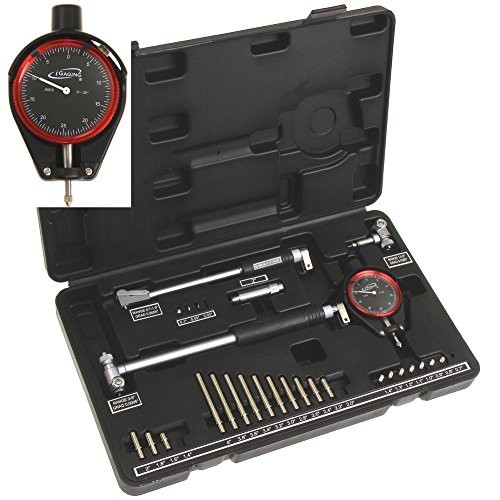
- Best for: rebuilders who measure everything from small bike engines to V8 blocks with a single gauge.
- Measuring range: 0.7-6 in
- Graduation: 0.0005 in
- Measuring depth: 10 in
- Model number: 34-6868-I

- Best for: home shops that measure compact and mid-size engine bores and want half-thousandth graduations.
- Measuring range: 1.4-6 in
- Graduation: 0.0005 in
- Model number: Ee20-1406
All 3 Picks at a Glance
| Product | Specs | Action |
|---|---|---|
| Fowler 52-646-300-0 Cylinder Dial Bore Gage |
| Check price on Amazon |
| iGaging 34-6868-I Dial Bore Gauge |
| Check price on Amazon |
| Accusize Ee20-1406 Dial Bore Gauge Set |
| Check price on Amazon |
Key takeaways
- Compare dial bore gauges for engine cylinders by range, graduation and depth, with analog sets from Fowler, iGaging, Accusize and YaeTek compared.
A dial bore gauge never reads an absolute size on its own, so the real decision is not which gauge looks most precise on paper. It is which range covers the cylinders you actually measure, whether the graduation is fine enough to show the taper and out-of-round you are hunting, and how you plan to set the zero before the gauge goes into the bore. Depth matters too, because a short stem cannot reach the lower part of a long diesel sleeve.
This roundup is for home engine builders checking a block on a stand, machinists verifying honing work, and mechanics who measure bores only a few times a year. Every pick below is an analog dial bore gauge chosen from its Amazon listing name and printed specifications, with the measuring range, graduation and depth taken from that listing rather than from brand marketing pages.
Quick Picks
As an Amazon Associate we earn from qualifying purchases
| Product | Best for | Key spec from title |
|---|---|---|
| Fowler 52-646-300-0 | Weekly cylinder work in a machine shop | 2-6 in range, 0.0005 in graduation |
| iGaging 34-6868-I | Small and large bores with one gauge | 0.7-6 in range, 10 in measuring depth |
| Accusize Ee20-1406 | Mixed engine jobs across many bore sizes | 1.4-6 in range, 0.0005 in graduation |
| YaeTek Dial Bore Gauge | Occasional checks on a simple dial | 2-6 in range, 0.001 in graduation |
How to Choose
Match the Range to the Bores You Actually Measure
Every dial bore gauge covers a fixed span, and the anvil set inside the case decides which part of that span you can reach. A 2 to 6 inch gauge suits most car and light-truck cylinders, but it cannot enter a small motorcycle bore or a valve-guide-sized hole. Measure the smallest and largest bores on your own jobs first, then pick a range that covers both with room to spare. A wider range such as 0.7 to 6 inches removes the need for a second gauge, although very wide sets rely on more anvil changes between sizes.
Graduation Decides the Smallest Change You Can See
Graduation is the smallest step marked on the dial face, and it sets the limit of what the needle can show you. A 0.0005 inch graduation reveals the half-thousandth steps that matter when you judge piston-to-wall clearance or check whether a honed cylinder stayed on size. A 0.001 inch dial is easier to read at a glance and still shows taper and wear patterns clearly, but it rounds each reading to the nearest thousandth. For engine work where the specification is written in ten-thousandths, the finer dial is the safer match.
Depth and Stem Length for Long Cylinders
A bore gauge reads where its measuring head sits, so the stem has to reach every height you want to check. Short stems work fine on shallow small-engine cylinders, yet they stop well above the bottom of a long diesel sleeve or a deep block bore. Listings state measuring depth directly: figures around 6 inches suit typical automotive blocks, while 9.5 and 10 inch depths reach the lower ring travel area of tall cylinders. Checking at three heights is how taper shows up, so buy enough depth for the deepest bore on your bench.
Setting the Gauge Before It Enters the Bore
A dial bore gauge is a comparative tool, which means it only reports how far a bore sits from the size you set it to. Most owners zero the dial in an outside micrometer opened to the target bore size, while production shops use a setting master or a ring gauge for repeatability. None of the sets here includes that setting tool, so budget your bench around a micrometer that covers your bore range. Anvil choice matters as well: fit the anvil that lands the needle near mid-travel so readings stay in the dial’s most reliable zone.
The 4 Best Options
Fowler 52-646-300-0 Cylinder Dial Bore Gage
- Best for: machinists and engine builders who check automotive cylinders daily and read in half-thousandths.
- Measuring range: 2-6 in
- Graduation: 0.0005 in
- Measuring depth: 9.5 in
- Model number: 52-646-300-0
machinists and engine builders who check automotive cylinders daily and read in half-thousandths.
the listing is for the gauge set only, so you still need a micrometer or setting master to zero it.
The Fowler 52-646-300-0 is the pick for readers who measure cylinders every week and want a name-brand dial bore gage whose listing leads with the figures that matter: a 2 to 6 inch range and 0.0005 inch graduations. Its 9.5 inch measuring depth reaches down long cylinder walls, so taper checks at several heights come from one setup instead of guesswork. Engine builders who already own a good outside micrometer for setting zero will feel at home with it, and one gauge covers most passenger-car and light-truck bores without a second tool joining the job.
iGaging 34-6868-I Dial Bore Gauge
- Best for: rebuilders who measure everything from small bike engines to V8 blocks with a single gauge.
- Measuring range: 0.7-6 in
- Graduation: 0.0005 in
- Measuring depth: 10 in
- Model number: 34-6868-I
rebuilders who measure everything from small bike engines to V8 blocks with a single gauge.
covering 0.7 to 6 inches means frequent anvil changes, so keep the case organized between jobs.
The iGaging 34-6868-I covers the widest span in this roundup, running from 0.7 inch up to 6 inches, which lets one set move between small motorcycle cylinders and full-size car bores without a drawer of separate gauges. The dial reads in 0.0005 inch steps, fine enough for piston clearance work, and the 10 inch measuring depth is the deepest here, reaching the bottom of tall cylinders where wear concentrates. Occasional rebuilders who want one purchase to cover a mixed fleet of engines will get the most from this range and depth combination.
Accusize Ee20-1406 Dial Bore Gauge Set
- Best for: home shops that measure compact and mid-size engine bores and want half-thousandth graduations.
- Measuring range: 1.4-6 in
- Graduation: 0.0005 in
- Model number: Ee20-1406
home shops that measure compact and mid-size engine bores and want half-thousandth graduations.
confirm the anvil count and stem length on the listing before ordering, since Accusize sells several similar sets.
The Accusize Ee20-1406 sits between the two gauges above: its 1.4 to 6 inch range starts low enough for many compact-car and small diesel bores, yet still tops out at the 6 inch ceiling most automotive work needs. The 0.0005 inch graduation matches the Fowler, so readings translate directly when you compare cylinders across a block or record sizes for a machine shop. Accusize sells through its own Amazon storefront with a deep measuring-tool catalog behind it, which helps when you later add micrometers or indicators from the same brand family.
YaeTek Dial Bore Gauge
The YaeTek Dial Bore Gauge is the straightforward option for readers who check a bore now and then rather than every day. Its 2 to 6 inch range matches common automotive cylinders, and the 0.001 inch graduation keeps the dial uncluttered and quick to read when you are sweeping for the reversal point. That coarser step is enough to spot taper, scoring wear and out-of-round before a block goes to the machine shop. It ships as a complete set with its anvils in a fitted case, ready to zero against your micrometer.
Specs
- Measuring range: 2-6 in
- Graduation: 0.001 in
- Model number: JK-0229-C2
Best for: occasional users who want a readable dial for wear checks before machining decisions.
Watch out for: the 0.001 inch graduation cannot show half-thousandth differences, so final clearance calls need a finer gauge.
ASIN: B07HLKWGK5
Which One Fits Your Situation
Measuring a V8 Block During a Home Rebuild
For a one-engine-at-a-time rebuild, the Fowler 52-646-300-0 fits best. Its 2 to 6 inch range covers small-block and big-block cylinders, the 0.0005 inch graduation shows the taper you need to judge a hone-versus-bore decision, and the 9.5 inch depth reaches every ring height in the bore. Pair it with the outside micrometer you already use for journals, set zero at the target size, and sweep each cylinder at three heights and two directions.
Checking Diesel Sleeves and Long Cylinders
Tall sleeves punish short stems, so reach decides this pick. The iGaging 34-6868-I brings a 10 inch measuring depth, the longest in this group, which lets you read near the bottom of the sleeve where wear and taper usually grow first. Its range also starts at 0.7 inch, so the same gauge handles the smaller bores on auxiliary engines and equipment in the same shop without a second purchase.
One Gauge for Motorcycle, ATV, and Car Engines
Mixed small engines rule out a plain 2 to 6 inch set, because many bike and ATV cylinders fall below 2 inches. The iGaging’s 0.7 to 6 inch span is the only one here that covers those small bores and still reaches 6 inches for car work. If your small engines all sit above 1.4 inches, the Accusize Ee20-1406 covers them with the same 0.0005 inch graduation and a range that fits in a smaller case.
Occasional Bearing and Bore Checks in a Small Shop
When the gauge comes out a few times a year to confirm wear before ordering parts, the YaeTek is the sensible match. Its 0.001 inch dial is quick to read, the 2 to 6 inch range covers the automotive bores a general shop sees, and the complete set stores in its own case. You give up half-thousandth resolution, so send final sizing decisions to a finer gauge or the machine shop’s instruments.
Common Mistakes
- Buying a 2 to 6 inch gauge when your smallest bore is under 2 inches, then finding the head will not enter the cylinder at all.
- Zeroing the dial against a caliper instead of a micrometer or setting master, which builds the caliper’s error into every reading.
- Reading the bore at one height only, missing the taper that shows up when you compare the top, middle and bottom of the cylinder.
- Forcing the gauge straight down instead of rocking it gently through the reversal point, which gives a reading larger than the true diameter.
- Storing the gauge loose in a toolbox drawer, where a bent stem or damaged anvil quietly ruins repeatability.
Frequently Asked Questions
Does a dial bore gauge show the actual bore size?
Not directly. A dial bore gauge is a comparative instrument: you set it to a known size with a micrometer or setting ring, zero the dial, and the needle then shows how much the bore differs from that set size. Add or subtract the needle movement from your set size to get the true diameter at that point in the bore.
What do I need to set a dial bore gauge before measuring?
You need a reference that matches your target bore size. Most home shops use an outside micrometer opened to the specification and held in a stand, while production environments use a setting master or a precision ring gauge. The gauge set itself does not include the reference, so confirm your micrometer range covers the bores you plan to measure.
Is a 0.0005 inch graduation necessary for engine cylinders?
For most engine decisions, yes. Piston-to-wall clearance and hone sizing are judged in ten-thousandths, and a 0.0005 inch dial shows half-thousandth steps clearly enough to follow them. A 0.001 inch dial still reveals taper and out-of-round patterns, but it rounds each reading to the nearest thousandth, which hides small differences between cylinders in the same block.
Can one dial bore gauge cover small and large bores?
Only if its listed range spans both. A 2 to 6 inch set cannot enter a 1 inch bore, no matter which anvil you fit. Wide-range sets such as the 0.7 to 6 inch iGaging cover small and large bores with anvil changes, while narrower sets are stiffer and quicker to set up inside their intended span.