Key takeaways
- Front-opening glass. The animal is approached from the front instead of from above, which many keepers find less stressful for ground-dwelling and shy species. Doors also let you use the full top for lighting.
- Top-opening tanks. Common for aquarium-style conversions. They can be cheaper, but a reptile can feel threatened by hands reaching from above.
- Screen-sided or mesh enclosures. Excellent airflow, but they hold heat and humidity poorly, which many species need.
- PVC or wood enclosures. Hold heat and humidity better but are usually in a higher price tier.
The best reptile terrarium under $150 is a front-opening glass enclosure sized to the animal: the Exo Terra 45 by 45 by 60 cm family suits tall-habitat species such as many geckos and tree frogs, the Zilla front-opening 18 by 18 by 25 in suits owners who want a familiar mid-size vertical tank, and the REPTI ZOO range suits buyers who want a lot of size choices, including long 30 by 12 by 12 in and 36 by 18 by 12 in layouts. Which one fits the cap depends on the size and the listing, and the animal’s species decides the size, not the other way around.
Our top picks


As an Amazon Associate we earn from qualifying purchases at no extra cost to you.
At a glance
Dimensions below come from the makers’ own pages or product listings. Gallon figures and exact sizes vary by listing, so use the dimension, not the gallon label, when comparing.
| Enclosure | Stated size | Door style | Best for | Limits |
|---|---|---|---|---|
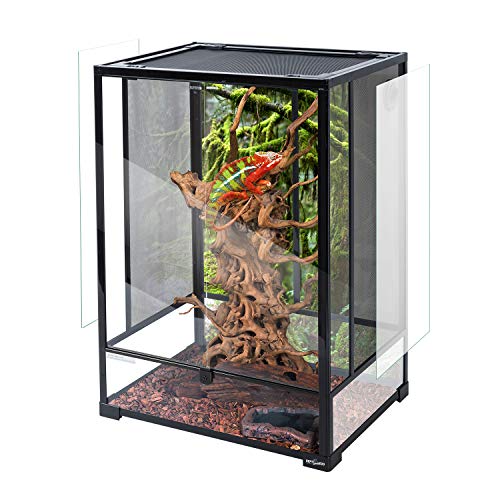
| Exo Terra Natural Terrarium Small X-Tall (45 x 45 x 60 cm) | 18 x 18 x 24 in | Dual front doors, front window ventilation, stainless steel mesh top | Arboreal species, tall planted setups | Tall size needs a securely placed stand; larger sizes and kits cost more |
| Exo Terra Tree Frog Terrarium (45 x 45 x 60 cm) | 18 x 18 x 24 in | Single front door, hinged lockable cover, built-in drain | Humid, tall setups with drainage | Drain and monsoon-style features are not needed for every species |
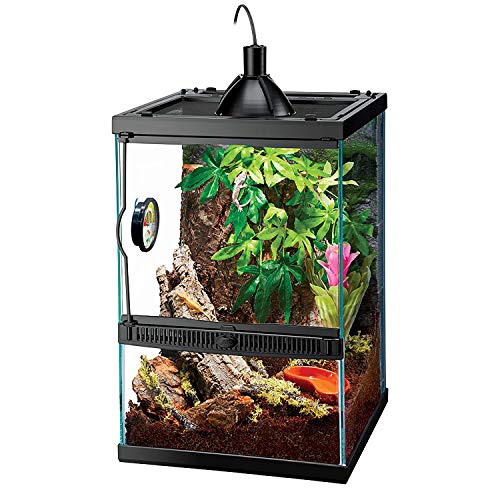
| Zilla Front-Opening Terrarium | 18 x 18 x 25 in | Front-opening glass door | Tall, mid-size habitats | Door opening size varies by listing; measure it |
| Zilla QuickBuild 20 gallon | 30 x 12 x 12 in | Swing door | Small terrestrial species needing floor length | Low height limits climbing set-ups |
| REPTI ZOO 18 x 18 x 24 in | 18 x 18 x 24 in | Double hinge door, top screen ventilation, knock-down | Tall habitats, budget-minded buyers | Knock-down assembly; check sealing and edges; door opening size varies by listing |
| REPTI ZOO 24 x 18 x 18 in | 24 x 18 x 18 in | Front opening, double doors | Small to mid-size ground-dwelling species | Species needs vary; follow a care sheet |
Species first, glass second
The single most important point in this category is that no terrarium is good in the abstract. A bearded dragon, a leopard gecko, a crested gecko, a ball python and a tree frog all need very different space, heat, light and humidity. Size recommendations come from a care sheet for the species and, ideally, a veterinarian who sees reptiles. Many commonly recommended minimums for adults are larger than the enclosures covered here, so a small terrarium may suit a juvenile or a small species, but not a full-grown larger animal. This guide only compares enclosures, and species care must come from a qualified source.
Heating, UVB lighting, thermostats and humidity gear are separate purchases that have their own safety rules. Heat lamps and heat mats are fire and burn risks if misused. Follow the manufacturer’s manual for each device, use a thermostat where the manual calls for one, keep cords and fixtures clear of flammable material, and have an electrician check your outlets if anything runs warm or trips a breaker. Never rely on a terrarium’s glass or mesh to shield a lamp, because the manuals for the fixtures specify distances and guards.
Front-opening glass versus other styles
- Front-opening glass. The animal is approached from the front instead of from above, which many keepers find less stressful for ground-dwelling and shy species. Doors also let you use the full top for lighting.
- Top-opening tanks. Common for aquarium-style conversions. They can be cheaper, but a reptile can feel threatened by hands reaching from above.
- Screen-sided or mesh enclosures. Excellent airflow, but they hold heat and humidity poorly, which many species need.
- PVC or wood enclosures. Hold heat and humidity better but are usually in a higher price tier.
Exo Terra: the tall, feature-rich family
Exo Terra’s site lists several lines at 45 by 45 by 60 cm. The Natural Terrarium Small X-Tall is described with dual front doors, front window ventilation, a waterproof bottom, a raised bottom frame, a stainless steel mesh top, locks, wire and tubing inlets and an included background. The same page lists 45 by 45 by 30 cm and 45 by 45 by 45 cm variants, plus larger 60 by 45 and 90 by 45 sizes. Series names and sizes overlap between pages, so match the exact model and dimensions on the product page to what you are buying.
The Tree Frog Terrarium at the same footprint has a 10 cm front glass panel, a built-in drain, a single front door and a hinged lockable cover, and it is described as monsoon-ready with tubing and a tap valve. The Dart Frog Terrarium is the shorter 45 by 45 by 45 cm version. Some product lines on the maker’s site are marked as archived, so confirm a model is still sold before choosing it.
Exo Terra enclosures are popular for arboreal and humidity-loving species because the vertical space and the drain are useful for planted setups. The extras are overkill for a desert species, so match the enclosure to the animal. A tall enclosure is also heavy when furnished, so use a stand rated for the weight.
Zilla front-opening terrariums: familiar mid-size options
Zilla lists front-opening terrariums at 8 by 10 by 15 in and 18 by 18 by 25 in, and a QuickBuild 20 gallon glass terrarium with swing door at 30 by 12 by 12 in. Zilla also sells kits, so compare the listed dimensions rather than the gallon label. The 18 by 18 by 25 in size resembles the Exo Terra footprint in a slightly taller package, while the 30 by 12 by 12 in suits small ground-dwelling species that need length.
Door opening sizes differ between listings and are not always stated, so if you plan to place large decor or move a bigger animal, measure the opening first. The low 12 in height is a limit for animals that climb, and may restrict lighting distance. Follow the lamp maker’s manual for required clearances.
REPTI ZOO: the widest range of sizes
REPTI ZOO’s listings show a large size range, including 18 by 18 by 24 in with a double hinge door and top screen ventilation as a knock-down model, 24 by 18 by 18 in with double doors, 18 by 18 by 13 in, 30 by 12 by 12 in, 24 by 12 by 12 in, 36 by 18 by 12 in and 48 by 18 by 18 in. Larger sizes are listed as well, and mini 8 by 8 by 8 in enclosures also appear. Because they ship knock-down, assembly takes care: check that the glass edges, seals and hinges are intact and follow the instructions for the silicone or sealing steps.
The wide size list makes it easy to match a species-specific minimum, with long, low sizes for terrestrial animals and tall sizes for arboreal ones. Door opening dimensions are not always listed, so check them when comparing, and expect the largest sizes to be more likely to cross the cap.
Cap check: what actually fits under $150?
Prices change and vary by seller, so this guide does not quote figures. As a general pattern, small and mid-size glass enclosures with simple door designs are the likeliest to fit under $150. Tall feature-rich lines with drains, backgrounds and integrated ventilation tend to climb in price as sizes increase, and larger floor areas from any maker can cross the cap. An enclosure that fits the animal’s adult needs can matter more than saving money on a juvenile-sized tank that you will replace in a few months.
Remember to budget for the setup beyond the glass: a stand, substrate, hides, lighting, a thermostat and thermometers. Those items together can match or exceed the cost of the enclosure.
Pick X if… decision table
| If you need | Pick | Why |
|---|---|---|
| Tall habitat for a climbing species | Exo Terra 45 x 45 x 60 cm or Zilla 18 x 18 x 25 in | Vertical space with front doors |
| Humid planted setup with drainage | Exo Terra Tree Frog Terrarium | Built-in drain, lockable cover |
| Long, low floor space | Zilla QuickBuild 30 x 12 x 12 in or REPTI ZOO 36 x 18 x 12 in | More length than height |
| Many size options | REPTI ZOO | Wide range of dimensions |
| Adult of a large species | Larger enclosure or higher tier | Confirm species minimum with a care sheet |
Setup and safety notes
- Place it on a rated stand. Glass enclosures are heavy once filled with substrate and decor.
- Secure the lid. Many reptiles and frogs escape through small gaps, and a locking top or doors helps.
- Keep heat sources guarded. Follow the fixture manual, use a thermostat if it calls for one, and keep cords tidy and dry.
- Hygiene. Wash your hands after handling animals or enclosure items, since reptiles can carry bacteria such as Salmonella. Keep young children and anyone with a weakened immune system away from direct contact and follow public-health guidance.
- Check the glass and seals. Chipped glass or failing silicone is a reason to replace or repair before use.
- See an exotics vet. Loss of appetite, stuck shed, swelling or lethargy are reasons for a visit.
Alternatives
- A used glass tank. Often cheaper, but check seals, scratches and whether the door and lid fit.
- A larger PVC or wood enclosure. Holds heat and humidity well and lasts longer but usually sits in a higher tier.
- A habitat kit. Some makers sell enclosure plus decor kits, which can simplify shopping if the species matches.
Frequently Asked Questions
What size terrarium does my reptile need?
It depends entirely on the species and the adult size. Use a species-specific care sheet and ask an exotics vet. Do not choose by gallon label alone, because height, length and floor area matter differently for ground-dwelling and climbing species.
Are front-opening terrariums better?
Many keepers prefer them because you approach the animal from the front instead of from above, and they leave the top free for lighting. They are not essential, but they make cleaning and handling easier for many species.
Can I use a glass terrarium for heat-loving species?
Glass enclosures are commonly used with heat sources, but ventilation, heat gradient and lamp distance must follow the equipment manuals and species guidance. Use a thermostat where recommended and ask a vet or experienced keeper if unsure.
Do I need a drain?
Only for humid, heavily misted setups, such as tropical frogs. A drain like the one on Exo Terra’s Tree Frog Terrarium can help, but a dry-climate species does not need it.
Is a knock-down enclosure as sturdy as a fixed one?
It can be, if assembled carefully, but the seals and hinges deserve a close look. Follow the maker’s instructions and check for gaps before adding an animal.
How do I keep the family safe around a reptile?
Wash hands after handling the animal or cleaning the enclosure, keep the enclosure out of food areas and follow public-health guidance on reptiles and young children.