Our Short List of 3
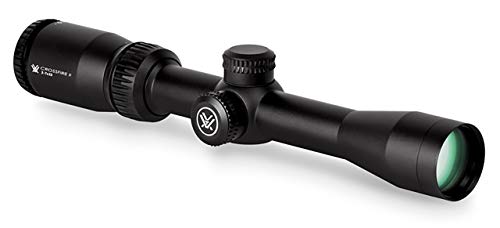
- Best for: Deer hunters who hold over rather than dial at 200 yards.
- Magnification: 3-9x
- Objective lens diameter: 40 mm
- Reticle: Dead-Hold BDC (MOA), second focal plane
- Tube size: 1 inch

- Best for: Lightweight bolt guns carried long distances for one careful shot.
- Magnification: 3-9x
- Objective lens diameter: 40 mm
- Reticle: Duplex, second focal plane
- Tube size: 1 inch

- Best for: AR-15 and AR-10 rifles that split time between close drills and 200 yard steel.
- Magnification: 1-6x
- Objective lens diameter: 24 mm
- Reticle: ACSS Nova, illuminated, second focal plane
- Field of view: 120 ft at 100 yards at 1x
All 4 Picks at a Glance
| Product | Specs | Action |
|---|---|---|
| Vortex Crossfire II 3-9×40 Dead-Hold BDC |
| Check price on Amazon |
| Leupold VX-Freedom 3-9×40 Duplex |
| Check price on Amazon |
| Primary Arms SLx 1-6×24 Gen IV ACSS Nova |
| Check price on Amazon |
 Bushnell Banner 2 3-9×40 DOA Quick Ballistic |
| Check price on Amazon |
Key takeaways
- Compare four rifle optics that fit 200-yard shooting, from 3-9x40 scopes to a 1-6x24 LPVO, with reticle, tube and eye relief details from each listing.
At 200 yards the buying decision is rarely about raw magnification. Most common centerfire loads are still flying fairly flat at that distance, so the real question is whether the reticle gives you a usable hold point, whether the turrets track honestly when you dial, and whether the eye box stays forgiving when you shoot from a field position instead of a bench. Pick wrong and you end up with a high-power scope that wobbles on target or a plain duplex that leaves you guessing on holdover.
This roundup is for deer hunters whose stands overlook 150 to 200 yard clearings, AR owners who shoot steel at known distances, and bolt-gun shooters setting up a first dedicated 200 yard rifle. Every pick below was chosen from its Amazon listing name and specification table, with low to mid magnification as the common thread, because that is the range class that stays practical at this distance.
Quick Picks
As an Amazon Associate we earn from qualifying purchases
| Product | Best for | Key spec from title |
|---|---|---|
| Vortex Crossfire II 3-9×40 | Hunters who want holdover marks | 3-9×40, Dead-Hold BDC reticle |
| Leupold VX-Freedom 3-9×40 | Lightweight carry rifles | 3-9×40, Duplex reticle, 12.2 oz |
| Primary Arms SLx 1-6×24 Gen IV | AR rifles shot fast at mixed ranges | 1-6×24, ACSS Nova reticle |
| Bushnell Banner 2 3-9×40 | Simple woods and field setups | 3-9×40, DOA Quick Ballistic reticle |
How to Choose
Magnification range that matches the distance
Two hundred yards sits in an awkward middle ground: it is far enough that a plain 1x sight makes small targets shrink, yet close enough that a 14x or 18x scope turns every heartbeat into visible wobble. A 3-9x or 2.5-10x range covers the distance comfortably, giving a wide view at the low end for scanning and enough enlargement at the top to place a shot on a vital zone or a small steel plate. Low power variable optics in the 1-6x class also work when the rifle doubles for closer shots, because the true 1x setting behaves almost like a reflex sight.
Reticle style and holdover help
With a 100 yard zero, many popular hunting loads drop only a few inches at 200, but that small drop is exactly what separates a clean hit from a low miss. A BDC style reticle with marked hold points below the center crosshair removes the guesswork, as long as you confirm the marks against your own load at the range. A plain duplex keeps the view uncluttered and suits shooters who dial elevation instead of holding. Illuminated reticles add visibility against dark timber at first and last light, though they add a battery to manage.
Turrets, tracking and adjustment range
If you plan to dial for distance, the turrets matter more than the glass coatings. Look for positive, repeatable clicks, a stated adjustment graduation such as quarter MOA or 0.1 MIL, and enough total travel that a 200 yard zero never runs the erector to its stop. Capped hunting turrets protect a set zero from bumps in a pack or truck, while exposed turrets suit range rifles that get adjusted every session. Whatever the style, the listing should state the click value plainly; vague adjustment claims are a warning sign.
Eye relief, tube size and mounting
Eye relief around three and a half to four inches keeps the scope off your brow under recoil and makes the sight picture easier to find from awkward positions. One inch tubes dominate this class and fit the widest selection of rings, while 30mm tubes appear on most low power variables. Check the listed weight before ordering, because a few ounces at the top of the rifle change how the gun balances on a long carry. Finally, confirm the scope ships with lens covers, since not every listing in this class includes them.
The 4 Best Options
Vortex Crossfire II 3-9×40 Dead-Hold BDC
- Best for: Deer hunters who hold over rather than dial at 200 yards.
- Magnification: 3-9x
- Objective lens diameter: 40 mm
- Reticle: Dead-Hold BDC (MOA), second focal plane
- Tube size: 1 inch
Deer hunters who hold over rather than dial at 200 yards.
The BDC marks are calibrated at the highest magnification, so holding with the scope set lower throws the spacing off.
The Crossfire II 3-9×40 is the default answer for a hunter who wants one scope that covers a 60 yard woods shot and a 200 yard field edge without any dialing. Its Dead-Hold BDC reticle puts hash marks below the crosshair for holdover, so a 200 yard shot becomes a matter of using the first mark instead of floating the crosshair over the target’s back. The long eye relief and forgiving eye box help when you mount the rifle quickly from a seated position, and the capped, resettable MOA turrets keep a confirmed zero protected between range trips.
Leupold VX-Freedom 3-9×40 Duplex
- Best for: Lightweight bolt guns carried long distances for one careful shot.
- Magnification: 3-9x
- Objective lens diameter: 40 mm
- Reticle: Duplex, second focal plane
- Tube size: 1 inch
Lightweight bolt guns carried long distances for one careful shot.
The Duplex has no holdover marks, so a 200 yard hold must come from your own drop data.
At 12.2 ounces, the VX-Freedom is the pick for a carry rifle that spends more time on a shoulder than on a rest. The plain Duplex reticle keeps the picture clean, which many hunters prefer when the shot at 200 yards comes at last light and a busy reticle would fight the fading background. Finger click adjustments in quarter MOA steps make zeroing straightforward, and the generous eye relief range suits harder recoiling cartridges. Shooters who want holdover marks should look at the other scopes here; this one rewards those who know their load’s drop and either hold slightly high or dial the difference.
Primary Arms SLx 1-6×24 Gen IV ACSS Nova
- Best for: AR-15 and AR-10 rifles that split time between close drills and 200 yard steel.
- Magnification: 1-6x
- Objective lens diameter: 24 mm
- Reticle: ACSS Nova, illuminated, second focal plane
- Field of view: 120 ft at 100 yards at 1x
AR-15 and AR-10 rifles that split time between close drills and 200 yard steel.
The 24 mm objective gathers less light than the 40 mm scopes here, so dawn and dusk shots look dimmer.
The SLx 1-6×24 suits the AR owner whose 200 yard shooting is steel, drills and the occasional coyote rather than a deer stand. At 1x the illuminated ACSS Nova reticle works almost like a reflex sight for close targets, and at 6x the BDC holds carry out well past 200 yards for common 5.56 and .308 loads. The fiber wire reticle is bright in daylight without washing out, and the second focal plane layout keeps the reticle the same visible size across the power range. It needs a 30mm mount, which the listing does not bundle with this version.
Bushnell Banner 2 3-9×40 DOA Quick Ballistic
- Best for: Hunters who want a basic scope with one useful hold point for 200 yards.
- Magnification: 3-9x
- Objective lens diameter: 40 mm
- Reticle: DOA Quick Ballistic
- Tube size: 1 inch
Hunters who want a basic scope with one useful hold point for 200 yards.
The hold points are generic ballistic references, so verify them against your exact load before trusting them on game.
The Banner 2 keeps things simple for a woods and field rifle that only needs to be right at hunting distances. Its DOA Quick Ballistic reticle adds aiming points below the crosshair for longer shots, giving a 200 yard reference without the cost or complexity of exposed turrets. The classic 3-9×40 format mounts low in standard one inch rings, and the rounded housing edges are less likely to snag on brush or a gun case. This is a set-and-forget optic: zero it at 100 yards, learn the first hold point with your load, and leave the capped turrets alone afterward.
Which One Fits Your Situation
Your stand overlooks a 200 yard clearing
Choose between the two BDC equipped 3-9×40 scopes. The Vortex Crossfire II gives you several hash marks and resettable turrets, which helps when the same rifle also shoots at 100 and 300 yards on the range. The Bushnell Banner 2 covers the clearing with a simpler reticle and a set-and-forget setup. Either way, confirm the first hold mark with your hunting load before the season opens.
You carry the rifle miles into the hills
The Leupold VX-Freedom earns its place through weight alone. At 12.2 ounces it keeps a mountain rifle lively, and its long eye relief protects you on steep uphill shots where your head position changes. You give up holdover marks, so carry a small drop card for your load taped to the stock, and practice holding on the first duplex post gap at 200 yards.
Your rifle is an AR used for drills and steel
The Primary Arms SLx 1-6×24 is built for exactly this pattern. Run it at 1x for close bays, roll to 6x for the 200 yard plate rack, and use the ACSS holds instead of stopping to dial. Budget for a 30mm cantilever mount in the height your stock needs, because the scope alone cannot attach to a flat top receiver.
One scope must serve a new shooter
Start with the Vortex Crossfire II. The eye box is forgiving while a new shooter learns cheek weld, the BDC marks make 200 yard holdover a visible concept instead of an abstraction, and the capped turrets prevent an accidental bump from wiping out a careful zero. Pair it with a fixed 100 yard zero and a printed hold chart for the first few range sessions.
Common Mistakes
- Buying a 6-24x scope for a 200 yard rifle, then fighting mirage, wobble and a narrow field of view that a 3-9x would have avoided.
- Trusting BDC hold marks straight out of the box without confirming them against your own load, barrel length and zero distance.
- Using holdover marks on a second focal plane scope at low power, where the spacing between marks no longer matches the chart.
- Mounting the scope so far forward or back that the eye relief only works from the bench, then struggling from field positions.
- Skipping a final zero check at 200 yards itself, even though that is the exact distance the rifle was built around.
Frequently Asked Questions
How much magnification do I really need at 200 yards?
For deer sized targets and steel plates, 6x to 9x at the top end is plenty, and many shooters leave a 3-9x scope near 6x for a steadier picture. Higher power mainly helps with small targets such as prairie dogs or paper groups. What matters more is a reticle you can read quickly and an eye box that does not punish small head movements.
Should I dial elevation or hold over at 200 yards?
Both approaches work at this distance. Holding over with a BDC reticle is faster and suits hunting, where the shot window is short. Dialing suits range shooting, where you can confirm the turret setting and shoot a group. Pick one method per rifle and practice it, because mixing methods under pressure is how a correct dope card still produces a miss.
Is a 200 yard zero better than a 100 yard zero?
A 100 yard zero keeps the bullet’s rise and fall small across the distances most hunters actually shoot, and it makes hold points easier to verify. A 200 yard zero puts the crosshair dead on at 200 but leaves the bullet high at 100, which can cause misses on closer shots. Most shooters in this class keep the 100 yard zero and learn the modest hold for 200.
Can a 1-6x LPVO really work at 200 yards?
Yes, provided the reticle carries hold points and the target is reasonably sized. At 6x a deer or a steel silhouette fills enough of the view for a confident hold, and the ACSS style reticles in this class print their holds for common loads. Where the LPVO gives ground to a 3-9×40 is low light, because the smaller objective lens gathers less of it.